Hey everyone, it’s Jake here from [Your Company Name] – the guy you go to when you need solid, reliable pressure vessel steel that won’t let you down. If you’re in the business of building boilers, storage tanks, heat exchangers, or any other pressure equipment, you know how critical it is to get the specs right. One wrong call on material properties can lead to huge safety risks, downtime, or even legal headaches. That’s why today I’m breaking down the mechanical properties of ASTM/ASME pressure vessel steel – no stuffy engineering jargon overload, just what you actually need to know. ASTM/ASME Pressure Vessel Steel
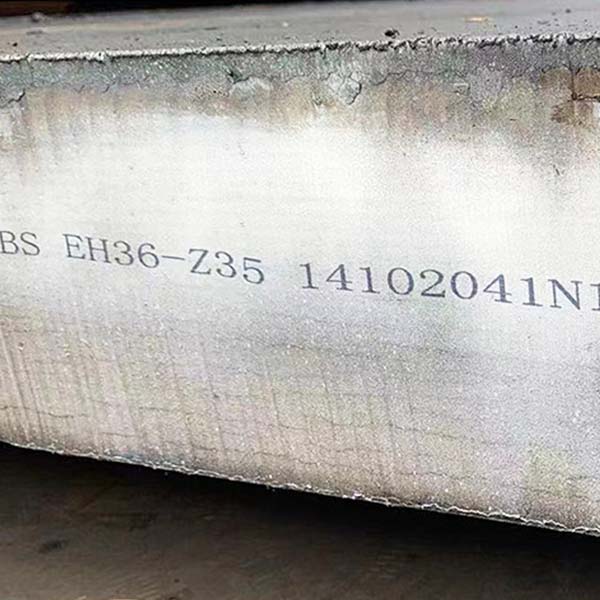
First off, let’s cut to the chase: ASTM and ASME standards aren’t just random numbers on a page. They’re developed over decades of testing, real-world use, and feedback from guys like you who are on the shop floor or managing projects. When we say we supply ASTM/ASME pressure vessel steel, we mean every coil, plate, or bar we send out meets those exact requirements – no shortcuts, no "close enough" stuff. So let’s dive into the key mechanical properties that make these steels the go-to for pressure applications.
Tensile Strength – The First Line of Defense
Tensile strength is basically how much pulling force a material can take before it breaks. For pressure vessels, this is non-negotiable. If your steel can’t handle the internal pressure pushing out, you’ve got a disaster waiting. Now, different grades have different tensile strength ranges, which is why we stock a mix depending on what our clients need. For example, the super common Grade A516 (used for general pressure vessels, especially in oil and gas, chemical processing, and power plants) has a minimum tensile strength of 60,000 psi and max of 80,000 psi. That’s tough enough to handle most standard pressure loads without stretching or failing.
Wait, but tensile strength isn’t just a single number – we also talk about yield strength here. Yield strength is the point where the steel stops being elastic (meaning it springs back when the force is removed) and starts being plastic (it stays bent or stretched permanently). For A516, minimum yield strength is 30,000 psi. Why does that matter? Because you don’t want your pressure vessel deforming permanently under normal operating pressure. If the yield strength is too low, over time the vessel will get bulges, cracks, or lose its shape, leading to leaks or failure. And yeah, all our A516 steel is tested to hit those exact specs – we run tension tests in our quality control lab before anything leaves our warehouse.
Impact Toughness – Handling Pressure Surges and Cold Temperatures
Here’s where a lot of people mess up: they only check tensile and yield strength, but impact toughness is just as important. Pressure vessels don’t just face steady pressure – they get surges, rapid temperature changes, or even sit in cold environments (like outdoor storage tanks in the North or cryogenic service). If the steel is brittle when it’s cold, a small impact (like a sudden pressure spike or a bump during installation) can cause a catastrophic crack.
ASTM/ASME pressure vessel steels are tested for impact toughness using the Charpy V-notch test, which measures how much energy the material can absorb before breaking. For example, Grade A516 Grade 70 (the most popular variant, since it has a tensile strenth of 70,000 psi minimum) requires a minimum Charpy V-notch impact value of 20 ft-lbs at room temperature. But if you need steel for cold climates, we also carry Grade A516 Grade 70 that’s tested to meet 20 ft-lbs at -20°F, or even lower for cryogenic use. This is a big selling point for our clients who work in regions with harsh winters or handle liquefied gases – you don’t want your tank cracking when it’s 10 below zero.
We recently had a client up in Canada who was building storage tanks for propane, and he told us he went with our A516 Grade 70 with -20°F impact toughness because his old supplier’s steel failed a cold test. Turns out, they were cutting corners on the alloying elements – we add just the right amount of manganese, nickel, and other elements to keep the steel tough without sacrificing strength. That’s the kind of attention to detail you get when you work with a supplier who actually understands these specs, not just ships metal from a warehouse.
Fatigue Resistance – For Cyclic Pressure Loads
If your pressure vessel is going to be repeatedly pressurized and depressurized (like in a batch process plant), fatigue resistance is key. Cyclic stress can cause small cracks to form over time, even if the steel never goes above its tensile strength in a single load. ASTM/ASME pressure vessel steels are formulated to have good fatigue resistance, but the grade matters here too. For example, Grade A387 (alloy steel for high-temperature service) has higher fatigue resistance than carbon steels like A516, because it has chromium and molybdenum added to improve high-temperature strength and cyclic performance.
A lot of our clients in chemical processing use A387 for reactors that heat up and cool down multiple times a day. They used to have issues with small cracks forming in their vessels after a few years, but switching to our ASME A387 material fixed that. Why? Because we ensure the steel has a fine grain structure – finer grains mean more grain boundaries to stop cracks from spreading, which boosts fatigue life. It’s not just about the chemical composition; it’s about how the steel is processed, rolled, and heat-treated. We work with mills that control every step of production so the grain structure is consistent, no matter how much steel you order.
Hardness and Wear Resistance – For Abrasive Services
Wait, hardness isn’t just for cutting tools – for pressure vessels that handle abrasive materials (like slurries, sand, or ore), hardness matters too. If the interior of your vessel is getting worn away by solid particles, it can thin the steel over time, reducing its ability to handle pressure. ASTM/ASME has specific grades for this too, like Grade A514, which is a high-strength, quenched and tempered steel with a hardness range of 260 to 320 HBW. That’s way harder than standard A516, so it resists abrasion much better.
We had a mining client a while back who needed steel for slurry tanks, and he tried a regular A516 once – within a year, the tank walls were worn down by half, and he had to replace the whole thing. When he switched to our A514, those tanks lasted three times as long. The difference? Hardness, but also the proper heat treatment – our A514 is quenched and tempered to get that high hardness without making it brittle, so it still has the impact toughness needed for mining applications. It’s a balance, and that’s something a lot of cheaper suppliers miss – they’ll send you hard steel that cracks easily, but we get it right.
Weldability – Because Your Vessel Has to Be Welded
Here’s another big one: no one builds a pressure vessel out of solid steel blocks – they weld the plates together. So weldability is a mechanical property too, and it’s part of the ASTM/ASME specs. If the steel is not weldable, welding it will cause cracks, especially in the heat-affected zone (the area next to the weld that gets hot during welding). The good news is that most ASTM/ASME pressure vessel steels are designed to be weldable, but you still have to follow the right procedures.
We always tell our clients that even though our steel meets all ASTM specs, you should use proper preheating and post-weld heat treatment (PWHT) when welding. For example, A516 Grade 70 might need a little preheat if you’re welding thick plates, but it’s way easier to weld than high-alloy steels like A387. We also supply welding consumables that are matched to our steel – we don’t just send plates and leave you to figure out the filler metal. This is why so many fabricators come back to us: we don’t just sell steel, we help them do the job right, from material selection to welding tips.
Corrosion Resistance – Wait, Is That a Mechanical Property?
Okay, technically corrosion resistance is a chemical property, but it affects mechanical performance, so I’m throwing it in here. Pressure vessels often handle corrosive materials – acids, bases, saltwater – so regular carbon steel won’t cut it. That’s why we stock stainless steel pressure vessel grades too, like A304 and A316, which have chromium added to resist corrosion. A316 has molybdenum too, so it’s even better for chloride environments, like saltwater or food processing with salt.
We had a client in the food and beverage industry who needed a tank for holding citric acid, and he tried A304 first – after six months, the tank had small pits from the acid. Switching to our A316 fixed that, and now those tanks are going strong after three years. The key here is that we don’t just sell "stainless steel" – we sell the right grade for the corrosion they’re dealing with. And all our stainless pressure vessel steel meets ASTM A240 and ASME SA240 specs, so you can trust it will perform.
What This Means for You as a Buyer
At the end of the day, the mechanical properties of ASTM/ASME pressure vessel steel are all about safety, reliability, and cost-effectiveness. If you pick the wrong grade, you’ll end up with downtime, repairs, or even safety incidents that cost way more than the extra money you tried to save. That’s why our job isn’t just to sell you steel plates – it’s to help you pick the right grade for your specific application, whether that’s a small boiler, a large storage tank, or a cryogenic vessel.
We get calls every week from guys who messed up by going with a cheap supplier that didn’t meet ASTM/ASME specs. They say things like, "Your steel is a little more expensive, but it’s saved us so much in repairs and replacements." That’s the value of working with a reputable supplier who knows their stuff. We run every batch of steel we get through third-party testing to confirm mechanical properties – tensile, yield, impact, hardness – so you never have to worry if the material on your dock is up to par.
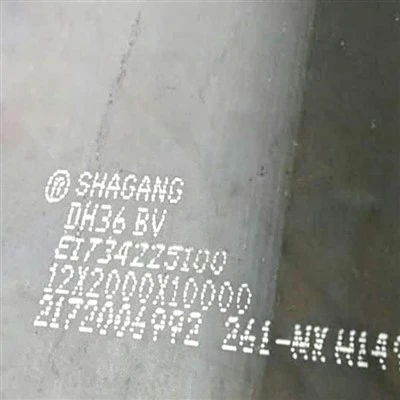
Wrapping this up, the main mechanical properties you need to focus on are tensile and yield strength (to handle normal pressure), impact toughness (to handle surges and cold), fatigue resistance (for cyclic loads), hardness/wear resistance (for abrasive services), and weldability (so you can actually build the vessel). And don’t forget corrosion resistance, because it will make your steel last longer and maintain its mechanical properties over time.
ASTM/ASME HSLA Steel Plate If you’re working on a pressure vessel project and need to make sure you’re using the right ASTM/ASME steel, don’t guess – reach out to us. We’ll walk through your application, help you pick the right grade, and even provide test certificates to prove the mechanical properties meet all specs. No sales pitches, no confusing jargon, just honest advice and quality steel. Let’s get your project done right, safely, and on time.
References
- ASTM International. (2023). Standard Specification for Pressure Vessel Plates, Carbon Steel, for Moderate and Lower Temperature Service (A516/A516M-23).
- ASME Boiler and Pressure Vessel Code. (2024). Section II, Part A: Ferrous Material Specifications.
- ASTM International. (2022). Standard Test Methods for Notched Bar Impact Testing of Metallic Materials (E23-22).
- ASME Boiler and Pressure Vessel Code. (2024). Section VIII, Divisions 1 and 2: Pressure Vessels.
- ASTM International. (2023). Standard Specification for Pressure Vessel Plates, Alloy Steel, Chromium-Molybdenum (A387/A387M-23).
Gnee Steel (Tianjin) Co., Ltd.
As one of the most professional astm/asme pressure vessel steel manufacturers and suppliers in China, we also support customized service with low price. We warmly welcome you to buy high quality astm/asme pressure vessel steel in stock here from our factory. If you have any enquiry about free sample, please feel free to email us.
Address: No.4-1114, Beichen Building, Beicang Town, Beichen District, Tianjin, China
E-mail: alloy@gneesteelgroup.com
WebSite: https://www.chinavesselplates.com/
