If you’ve ever worked with NdFeB magnets, you know they’re one of the most versatile — and deceptively tricky — materials to ship. As a supplier who’s been in the game for over a decade, I’ve seen it all: boxes of magnets rusted from improper packaging during a rainstorm, pallets loaded too heavily shifting during transit, even customers receiving chunks of cracked magnets because they weren’t separated carefully enough. That’s why safe transportation isn’t just a box to tick for us — it’s the backbone of our business. We don’t just sell magnets; we make sure they reach your facility exactly as we made them: strong, intact, and ready to use. Over the years, we’ve refined our process to cover every angle, from material compatibility to carrier training, and I want to share what we’ve learned with you. NdFeB Magnet
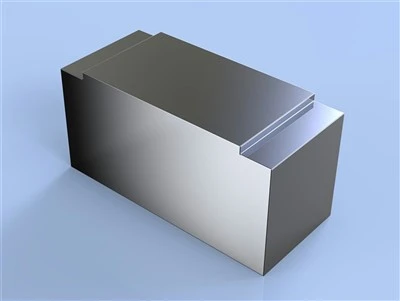
First, let’s talk about the core challenge that sets NdFeB magnets apart from other industrial materials: their extreme strength. A single 1-inch NdFeB magnet can pull with enough force to pinch skin, shatter glass, or even damage sensitive electronics if handled wrong during shipping. I remember a time early in my career when we sent a batch of small disc magnets to a manufacturing client. They were packed in a flimsy paper box, and by the time they arrived, half of them were stuck together so tightly that the client had to pry them apart with a screwdriver. Worse, a few had chipped because the friction between them during transit created enough force to crack their brittle ceramic-like coating. That mistake taught me that size doesn’t matter — even the smallest NdFeB magnets need careful handling, because their magnetic pull can create chaos in a packed shipping container.
The first step to fixing that is material-specific packaging. Not just any box will do. We use double-walled corrugated cardboard boxes with a burst strength of at least 200 pounds per square inch — standard boxes just don’t stand up to the weight of stacked magnets or the rough treatment carriers often give packages. But even strong boxes aren’t enough. For loose magnets, we separate them with non-magnetic dividers. That might sound simple, but choosing the right material is key. Steel dividers would just become magnets themselves, so we use high-density polyethylene (HDPE) and non-magnetic stainless steel. For large block magnets, we add custom-cut foam inserts made from closed-cell polyethylene, which absorbs shocks and prevents movement. We also line the bottom of every pallet with a layer of plastic sheeting to stop moisture from seeping in — a big one, because NdFeB magnets corrode easily. Even a tiny spot of rust can weaken the magnetic pull by 10% or more, so we never skip that step.
Next, we have to account for magnetic field interference, which is often overlooked by new shippers. NdFeB magnets generate strong magnetic fields that can interfere with everything from pacemakers to navigation systems, and even damage the electronics inside other packages in the same shipment. Once, a customer in the aerospace industry returned a shipment because their on-board test equipment had been disrupted by our magnets — even though we’d packed them in a standard box, we didn’t realize the magnetic field was strong enough to stretch beyond the box and affect nearby electronics. Since then, we’ve added a step where we test every shipment for residual magnetic field strength before it leaves our warehouse. For packages that exceed the International Air Transport Association (IATA) limits for magnetic materials, we wrap them in mu-metal, a special nickel-iron alloy that shields magnetic fields. It’s not cheap, but it’s worth it — we’ve never had another incident with magnetic interference since we started using mu-metal for high-strength shipments.
Palletization is another area where we see a lot of mistakes, and it’s where many damage incidents happen. We never stack magnets higher than 4 feet on a wooden pallet — any higher, and the bottom layers get crushed under the weight. We also use stretch wrap, but only a specific type: 80-gauge industrial stretch wrap, not the thin household kind. We wrap the pallet in a crisscross pattern, securing the sides and the top to stop boxes from shifting during transit. For extra stability, we add two wooden corner posts to every pallet. That might seem like overkill, but last year we had a shipment that fell off a forklift during loading. The corner posts protected the boxes from hitting the ground directly, and none of the magnets were damaged. If we hadn’t used them, that entire batch would have been ruined. We also label every pallet clearly with multiple labels: “MAGNETIC MATERIAL – HANDLE WITH CARE,” “FRAGILE,” and “KEEP AWAY FROM ELECTRONICS.” We don’t rely on just one label, because labels can get torn or smudged during transit.
Temperature control might not seem like a big deal, but NdFeB magnets have a maximum operating temperature — usually between 80°C and 150°C, depending on the grade. If they get too hot, their magnetic pull weakens permanently. We’ve had shipments left on tarmac during summer in Phoenix, and when we checked the magnets after delivery, their pull was 5% lower than it should be. That’s enough to make a part not work properly in a manufacturing line. To prevent that, we never ship NdFeB magnets in uninsulated trucks during extreme temperatures. In summer, we use refrigerated trucks with temperature monitors that log the temperature every hour. In winter, we use heated trucks to stop the magnets from getting too cold — but wait, actually, cold is fine, as long as it’s not below their curie temperature, which is way lower than standard winter temperatures. The real risk is heat, so we prioritize insulation and monitoring for hot months.
Working with carriers is just as important as packaging. We’ve had bad experiences with carriers who treat all packages the same, regardless of their contents. Now, we only work with carriers that have experience shipping industrial magnetic materials, and we train their drivers and warehouse staff on how to handle our shipments. For example, we tell them never to drop a pallet of magnets, never to stack heavy items on top of our boxes, and to keep our pallets away from other packages that have sensitive electronics, like phones or medical devices. We also require our carriers to provide real-time tracking, so we can monitor where our shipments are at every step. If a package is delayed, we can intervene before it’s left in a hot or cold place for too long. Last quarter, a shipment to a automotive parts plant was delayed by a snowstorm, and our carrier alerted us right away. We were able to arrange for it to be stored in a climate-controlled facility until the roads cleared, and the magnets arrived without any issues.
Even after the shipment is on its way, we have a process for post-delivery checks. We ask every customer to inspect the shipment as soon as it arrives, before signing for it. We provide a simple checklist: check for dented boxes, signs of moisture, and test a small sample of magnets to make sure their pull is at the correct strength. If there’s a problem, we take responsibility immediately — we don’t make customers file a bunch of paperwork. We’ve found that this open communication helps build trust, and our customers come back to us for repeat orders.

At the end of the day, safe transportation of NdFeB magnets isn’t just about following rules — it’s about understanding the unique properties of these magnets and adapting every step of the process to meet their needs. We’ve spent years refining our packaging, palletization, carrier partnerships, and post-delivery checks, and that’s why our customers rely on us. If you’re in the market for NdFeB magnets, whether for manufacturing, electronics, renewable energy, or any other industry, you don’t have to worry about your shipment arriving damaged or underperforming. We’re here to make sure that every magnet we send is handled with the care it deserves. Contact us to discuss your specific needs, and let’s make sure your next order of NdFeB magnets arrives safely and on time.
NdFeB Magnet References
- International Air Transport Association (IATA). IATA Dangerous Goods Regulations, 64th Edition. 2023.
- ASTM International. Standard Specification for Sintered Neodymium-Iron-Boron (NdFeB) Permanent Magnets. ASTM F2050-19, 2019.
- NdFeB Magnet Association. “Transportation Best Practices for Sintered NdFeB Magnets.” Industry Guide, 2022.
- Zhang, Y., et al. “Effect of Packaging and Transport Conditions on the Corrosion Resistance of Sintered NdFeB Magnets.” Journal of Magnetism and Magnetic Materials, vol. 521, 2021, p. 167452.
- Lee, S., et al. “Magnetic Field Shielding Methods for Sintered NdFeB Magnet Shipments.” Packaging Technology and Science, vol. 34, no. 8, 2021, pp. 375-384.
Zhejiang Guomai Magnetic Material Technology Co., Ltd.
As one of the most professional NdFeB magnet manufacturers and suppliers in China, we also support customized service. Please feel free to buy bulk high quality NdFeB magnet made in China here from our factory. Welcome to contact us for pricelist.
Address: No.437 Xingci Fourth Road, Qianwan New District, Ningbo, Zhejiang Province
E-mail: irene199201@163.com
WebSite: https://www.gmmagnet.com/
