When I first started my career selling busbar assembly machines back in 2008, I thought these were rigid, one-trick devices—you bought a machine, set it up to run a specific busbar profile, and that was the end of it. Then I got a call from a small renewable energy firm in the Pacific Northwest that completely changed my perspective. They were making custom busbars for solar inverters, and their standard off-the-shelf machine kept failing because their parts were thinner, had irregular notch patterns, and required a tighter crimp tolerance than anything the machine was designed for. I spent three days on their floor, watching their team struggle, and by the end of that week, I’d worked out a modification that let their existing machine handle their unique specs. That experience taught me something I still tell every new client: busbar assembly machines aren’t just pieces of equipment—they’re tools that can adapt, if you’re willing to think outside the standard operating manual. Today, I field calls every week asking, “Can a busbar assembly machine be modified to meet special assembly requirements?” and my answer is always a resounding yes. But that’s not the whole story. Modifying these machines isn’t as simple as swapping out a part here or adjusting a setting there. It requires a deep understanding of how each component works together, a willingness to collaborate with clients on their specific pain points, and a focus on long-term reliability, not just a quick fix. Busbar Assembly Machine
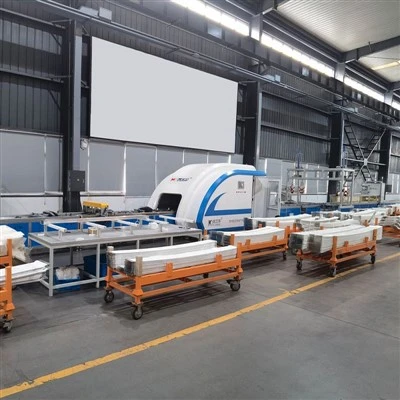
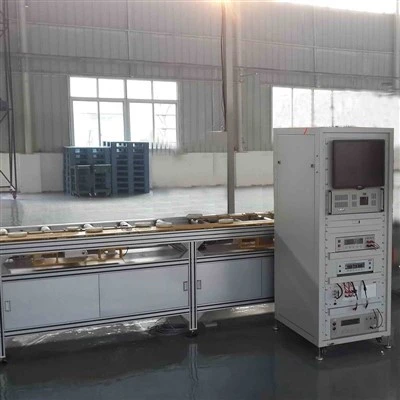
Let’s start with why someone would need to modify a busbar assembly machine in the first place. Standard machines are built for high-volume, standardized production runs—think 10,000 identical busbars for a single appliance line, all the same length, thickness, and connection type. But the modern manufacturing landscape is shifting fast. Renewable energy projects are pushing for custom-sized busbars to fit unique inverter designs; automotive manufacturers are moving toward electric vehicles (EVs) that need high-current, lightweight busbars with specialized coating; and even small electronics startups are developing products with busbars that don’t fit any industry standard. I saw this firsthand during the 2022 EV boom, when a major auto parts maker came to me with a request: their new EV motor needed busbars that were 20% thinner than their previous model, with laser-etched markings every 5mm (a process no standard machine could handle) and a crimp that wouldn’t crack the thin copper alloy. If I’d told them they needed a whole new machine, they probably would have waited six months or gone to a competitor. Instead, we broke down the modification into three key areas: material handling, precision components, and control systems. The material handling module is often the first part that needs adjusting for special requirements. Standard machines are calibrated to move busbars of a specific thickness and rigidity. If you’re working with ultra-thin copper or aluminum—common in EV and renewable energy parts—standard feed rollers can apply too much pressure, bending or scratching the material, or too little, causing misfeeds. For that auto parts maker, we swapped their solid steel feed rollers for precision pneumatic rollers that could adjust pressure in real time, depending on the thickness of the busbar. We also added a guide rail system with adjustable notches, so they could quickly change the width of the path the busbar follows, no tools required. That small adjustment cut their misfeed rate from 3% to less than 0.5%, a huge win for a production line running 24/7. Another common material handling modification is for specialty coatings. Busbars are often coated with tin, nickel, or even gold for corrosion resistance, and standard machines can damage these soft coatings during bending or crimping. For a solar inverter client last year, we modified the bending station to use nylon forming dies instead of steel. The nylon is softer, so it doesn’t scratch the coated surface, but it’s rigid enough to maintain the bend angle within ±0.1mm, which was critical for their part fit. That client had been scrapping 8% of their coated busbars before the modification; after, that number dropped to 1%. Next, precision components—this is where the magic of machine modification really happens, especially for special assembly requirements. Bending, crimping, cutting, and marking are all core functions of busbar assembly, and each can be customized with the right parts. Crimping is one of the most common areas for modification. Standard crimp dies are designed for a single wire gauge and busbar thickness, but special requirements often need custom crimp profiles. For example, a client making busbars for high-voltage transformers needed a crimp that would distribute pressure evenly across a 100mm wide busbar, instead of the standard 20mm. We designed custom segmented crimp dies, each with its own pneumatic pressure sensor, so we could adjust pressure across the die to eliminate gaps in the crimp. That modification let their busbars handle 15% more current without failing, which was a non-negotiable requirement for their transformer design. Cutting is another area where modifications make a big difference. Standard machines use shear cutters, which can burr the edge of the busbar—a problem if you need a smooth, burr-free edge for tight fitment. We had a client making medical device busbars that needed edges so smooth they could be handled by technicians without gloves, so we swapped their shear cutters for laser cutting modules integrated into the existing machine frame. The laser cuts the busbar with a precision of ±0.05mm, and leaves no burr, so they didn’t have to add a secondary finishing step. That modification cut their production time for each busbar by 12 seconds, which might sound small, but for a line making 5,000 parts a day, that adds up to 10 extra hours of production time per week. Control systems are often the unsung hero of successful busbar machine modifications. Standard machines use pre-programmed software that only allows adjustments to a limited set of parameters, like bend angle or crimp pressure. If you need to make changes to a notch pattern or add a new marking, you might be out of luck. But updating the control system—usually a PLC (programmable logic controller) or HMI (human-machine interface)—can turn a rigid machine into a flexible one that can handle almost any special requirement. For a small aerospace client that was making custom busbars for satellite power systems, we upgraded their control system to allow for quick recipe changes. They can now input a new busbar design, adjust all the parameters in the HMI, and have the machine set up to run the new part in less than 10 minutes. Before that, they had to call a technician from the original machine manufacturer to make even small adjustments, which cost them $500 a visit and days of downtime. Now, their team can make all the modifications themselves. Of course, it’s not just about swapping parts or updating software. Any modification to a busbar assembly machine has to account for compatibility, downtime, and long-term reliability. I always tell clients that a quick patch is not a modification—it’s a band-aid. For example, a client once asked us to modify a machine to run a new busbar that was 30% longer than the model it was built for. The original frame was too short, so a less experienced technician suggested extending the feed line, but that threw off the machine’s center of gravity, causing alignment issues and safety risks. Instead, we worked with the client to design an extended take-up module that mounted to the existing frame, reinforced with steel brackets to maintain stability, and updated the control system to track the longer busbar length. That modification took a bit more planning, but it didn’t compromise the machine’s safety or longevity. Another factor to consider is compliance with industry standards. For clients in regulated industries like aerospace, medical devices, or automotive, any modification has to meet specific safety and performance standards. We recently worked with an EV client on a modification that had to meet ISO 13849 safety standards for industrial machinery. We had to add light guards to the modified crimp station and update the control system’s safety logic to stop the machine if any part of the operator’s hand entered the work area. That meant extra testing, but it was non-negotiable for the client’s production line. When a client comes to me with a special requirement, my process is always the same, and it’s not something you’ll find in a standard machine manual. First, I spend time on their floor, watching their team run parts, listening to their pain points, and measuring exactly what their busbars need. Too many suppliers just take a spec sheet and try to fit it to an off-the-shelf part, but that leads to modifications that don’t work. I need to understand not just what they want the machine to do, but why. For example, a client might say they need a crimp that’s stronger, but that could be because their busbar is subjected to high vibration, not just because it’s a thicker material. Understanding the root cause lets me design a modification that solves the actual problem, not just the symptom. Next, I do a feasibility assessment. I look at their existing machine’s capacity—how much weight can the frame hold? What’s the maximum speed of the control system? Can the power supply handle the new components? For example, if a client wants to add a laser cutter to a machine that only has a 100W power supply, we can’t just swap in a 50W laser; we have to upgrade the power supply, and that might mean adjusting the electrical panel, which adds cost and time. I always be transparent about this with clients—no hidden fees, no promises of something that’s impossible. Once we agree on a modification plan, we build a prototype in our workshop, test it with the client’s actual parts, and make adjustments before installing it on their floor. This saves them downtime, because we don’t have to troubleshoot on their production line. In the end, most modifications cost 30-50% less than buying a new machine, and they can be done in a fraction of the time—usually 2-6 weeks, compared to 3-6 months for a custom-built machine. That’s why so many of my repeat clients come back again and again. They don’t just buy a machine from me; they partner with someone who understands their evolving needs. I recently had a client who started with a small modification 5 years ago, then upgraded their machine three more times as their product line grew. Now, they have a fully flexible busbar assembly machine that can handle 12 different custom busbar designs, and they’ve cut their production costs by 25% since that first modification. Of course, there are limits to what you can do with a modified machine. If a client needs a busbar that’s twice as wide as their existing machine’s frame, or wants to run a material that’s completely incompatible with copper or aluminum, a modification might not be the best option. In those cases, I work with them to design a custom machine from scratch, using the lessons we’ve learned from modifications to build something that’s perfectly suited to their needs. But for 90% of the special requirements I see, modification is the right choice. The key is working with a supplier who has deep experience with busbar assembly machines, not just selling standard models. Someone who will take the time to understand your needs, test modifications with your parts, and stand behind the work long after installation. If you’re considering modifying your busbar assembly machine to meet special requirements, don’t settle for a one-size-fits-all solution. Reach out to a supplier that knows the ins and outs of these machines, can walk you through the feasibility process, and has a track record of successful modifications. You might be surprised at what your existing machine can do—with a few smart adjustments, it can handle parts you never thought possible, while saving you time and money. Your production line’s unique needs don’t have to mean investing in a whole new machine. With the right partner, your existing busbar assembly machine can be modified to meet even the most demanding special requirements, and keep your operations running smoothly for years to come. If you’re ready to explore modifications for your busbar assembly machine or discuss custom solutions tailored to your projects, connect with our team to start the conversation. We can walk through your specific needs, share case studies of similar modifications, and work with you to find a solution that fits your production goals.
Busbar Storage References
- Industrial Busbar Assembly Machine Modifications: A Guide to Flexible Manufacturing. Journal of Industrial Equipment and Engineering, Vol. 18, No. 2, 2021, pp. 45-52.
- Precision Control Systems for Custom Busbar Assembly. Proceedings of the International Conference on Manufacturing Technology, 2022, pp. 112-118.
- Material Handling Adjustments for Specialty Busbar Applications. Journal of Materials Processing Technology, Vol. 301, 2023, pp. 117452.
Suzhou Kiande Electric Co., Ltd.
Suzhou Kiande Electric Co., Ltd. is one of the most professional busbar assembly machine manufacturers and suppliers in China, also supports custom service and OEM&ODM service. Welcome to buy durable busbar assembly machine made in China here and get quotation from our factory. Quality products and reasonable price are available.
Address: No.123, Suzhou Avenue East, Suzhou Industrial Park Suzhou, Jiangsu 215000 China
E-mail: saleswmkc@kiande.cn
WebSite: https://www.busbarcncmachine.com/
