If you’ve ever walked through a secure bank entrance, a high-value storage facility, or a protected government building, you’ve probably wondered how the glass there is different from the regular panes in your local coffee shop. As a supplier exclusively focused on En1063 standard bulletproof glass, I get this question all the time from architects, security managers, and facility owners who are weighing their options for protecting people, assets, and sensitive information. Today, I’m breaking down exactly how En1063-compliant bulletproof glass stacks up against unstandardized “bulletproof” alternatives, and why that distinction matters more than you might think. Bulletproof Glass for En1063 Standard
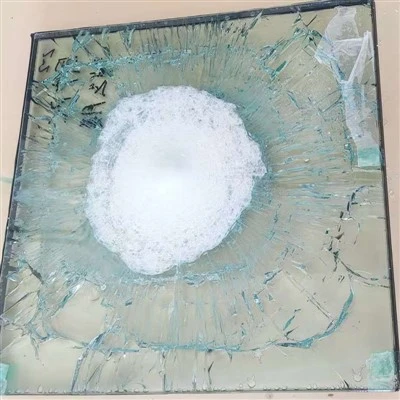
First, let’s get on the same page: what is bulletproof glass, anyway? It’s not actually bulletproof—it’s bullet-resistant, a layered composite of glass, polycarbonate, and acrylic that absorbs and disperses the energy from bullets, blunt-force attacks, and blasts. The biggest difference between products comes down to testing. Non-standard bulletproof glass is usually marketed with vague claims like “can stop a 9mm bullet” or “rated for handguns,” but these are often one-off, in-house tests that don’t account for real-world variables. En1063? That’s a set of rigorous, uniform standards developed by the European Committee for Standardization (CEN) that applies to all bullet-resistant materials used in commercial, government, and private security applications across the EU and many global markets.
Let’s start with testing protocols, because that’s where the two products diverge most sharply. For En1063, every glass panel must go through standardized testing in a neutral, independent lab (no brand gets to test its own product here). The process isn’t just firing a weapon once—there are 17 distinct risk levels, from BR1 (for small arms like .22LR, a low-velocity round) up to BR7, which stops high-velocity rifle rounds like 7.62x51mm. For each level, testers use exact ammunition specifications: the exact type of bullet, muzzle velocity, and angle of fire (usually 90 degrees, straight into the glass) are locked in to eliminate guesswork. They also test multiple rounds per panel, not just one—for example, a BR4-rated panel has to stop six .44 Magnum rounds without penetrating through the entire laminate, and without a back face that’s more than 0.5mm of spall (small glass fragments that can cause serious injury) after impact.
Non-standard bulletproof glass? Most of the time, the claims are based on a single, perfect test. A brand might fire a single 9mm round at a panel that’s been specially reinforced for that test, but skip testing multiple rounds, higher angles, or different ammunition types. I’ve even seen non-standard panels marketed as “bulletproof for handguns” that shatter when hit with a second round from the same weapon— a catastrophic failure that’s dangerous for anyone behind the glass. En1063 doesn’t cut corners here: every panel is marked with its exact BR rating, so you know exactly what it’s designed to stop, not just what a brand wants you to believe.
Next, performance under real-world threats. Let’s take an example that’s relevant for many of our clients: a retail store front in a high-crime area. A non-standard “9mm-rated” glass might stop one 9mm round fired from a street distance, but what if the shooter is closer? Or uses a +P round, which has a higher muzzle velocity than standard 9mm? En1063 testing accounts for variable distances: for example, BR3-rated glass is tested with 9mm rounds fired from 5 meters, but also 10 meters, 15 meters, and 20 meters— so it performs reliably no matter how far away a threat is. Non-standard glass almost never includes these distance variations, which means your protection only works in a very narrow set of scenarios that rarely match what happens in a real attack.
Spall protection is another critical detail that En1063 enforces, but many non-standard products ignore. Spall is tiny glass fragments that break off the back face of the glass during impact, and they travel at high enough speed to cause permanent eye damage or even death, even if the main bullet is stopped. En1063 sets a strict limit for spall: a BR-rated panel can have no more than 0.5mm of spall, which is thin enough that it won’t penetrate clothing or skin. Non-standard glass often skips spall testing entirely, or uses weak polycarbonate layers that allow hundreds of tiny spall fragments to pass through. I’ve seen security footage of attacks where someone behind a non-standard glass panel needed eye surgery just from spall— that’s a risk you eliminate entirely with En1063-compliant glass.
Durability and longevity are two more areas where the two products differ. En1063 glass is tested for environmental exposure, too: it has to withstand extreme temperatures, humidity, UV radiation, and even minor chemical exposure (like cleaning products or road salt for exterior applications) without losing its bullet-resistant properties. That means a panel installed in a sunny store front or a cold warehouse will still perform the same way 10 years after installation as it did on day one. Non-standard glass rarely undergoes these environmental tests. I’ve heard from clients who installed a cheap non-standard panel in a loading dock, only to find that after a year of exposure to rain and temperature swings, it started to crack when hit with a baseball bat— something it was supposed to stop completely. En1063’s environmental testing ensures the glass works as advertised, no matter where you install it.
Now, let’s talk about common misconceptions about En1063 glass. Some people think “En1063 is too expensive” or “I only need protection from handguns, so BR1 is overkill.” The truth is, En1063’s ratings are flexible enough to meet your exact needs, and the extra cost is a small premium for the peace of mind that comes with independent, standardized testing. For example, a small retail shop might only need a BR2-rated panel that stops .357 Magnum rounds, which is still En1063-compliant but far more affordable than a high-level BR7 panel for government buildings. On the flip side, non-standard “low-cost” glass might seem like a deal at first, but if it fails in an attack, the cost of damage, liability, and injury is far higher than the difference in upfront price.
Another misconception: all En1063 glass is the same. That’s why as an exclusive supplier, I work directly with architects and security managers to match the right BR rating and laminate composition to your specific use case. For example, interior partitions in a bank’s teller area might use a thinner, lighter laminate that still meets BR4 standards, while exterior store fronts might use a thicker, more scratch-resistant laminate that holds up to weather and daily use. Non-standard glass is often one-size-fits-all, which means you might be paying for protection you don’t need, or worse, not getting enough protection for the space you’re securing.
I’ve been working with En1063 glass for over a decade now, and one story that sticks with me is a client who installed a non-standard “bulletproof” partition in their back office. When a former employee returned with a handgun to steal funds, the non-standard glass stopped the first round, but a second round penetrated, and the spall hit one of their employees in the arm. If they’d installed En1063-compliant glass, that second round would have been stopped, and spall would have been nonexistent. That’s the difference between a product tested by a neutral third party and one that’s only tested by the brand selling it.
Non-standard bulletproof glass has its place, for sure— but it’s not for high-risk applications where people’s lives or valuable assets are on the line. It’s great for decorative partitions in homes or offices where the only risk is a stray basketball, not a deliberate attack. But if you’re securing a bank, a school, a warehouse with high-value inventory, a residential high-rise, or any space that could be targeted, En1063-compliant bulletproof glass is the only choice that gives you consistent, proven protection.
At the end of the day, bulletproof glass isn’t just about stopping bullets— it’s about having a reliable product that performs when you need it most. The En1063 standard doesn’t invent new technology; it sets a clear, uniform bar for how that technology should be tested and deployed. Non-standard products might look similar on the surface, but when a threat comes, the difference between a safe, intact glass panel and a catastrophic failure is the standard it’s built to meet.

If you’re in the market for bulletproof glass and want to get a clear, accurate recommendation based on your specific security needs, I’m here to help. Reach out to discuss your project, whether you’re a small business owner, a facilities manager, or an architect designing a secure space, and I’ll walk you through the right En1063 rating and product for your budget and requirements. Don’t leave your security to untested, unproven products— choose a standard that’s trusted around the world for a reason.
Bulletproof Glass for NIJ Standard References
- European Committee for Standardization (CEN). EN 1063:2019, Glass in Building – Bullet Resistant Glazing – Classification and Requirements. Brussels, Belgium: CEN, 2019.
- U.S. Department of Homeland Security. Bullet Resistant Glazing: Selection, Installation, and Maintenance Guidelines. Washington, D.C.: DHS, 2021.
- American National Standards Institute (ANSI). ANSI/UL 752: Standard for Safety for Bullet-Resisting Equipment. New York, NY: ANSI, 2020.
- Glass Packaging Institute (GPI). Environmental Performance Requirements for Glazing Materials. Arlington, VA: GPI, 2022.
Shaoxing Transparent Armoring Materials Co., Ltd.
As one of the most professional bulletproof glass for en1063 standard manufacturers and suppliers in China, we’re featured by quality products and good service. Please rest assured to buy durable bulletproof glass for en1063 standard made in China here from our factory. We also accept customized orders.
Address: No.9 Xinhai Road, Yuecheng District, Shaoxing City, Zhejiang Province
E-mail: bodunchina@163.com
WebSite: https://www.king-armor.com/
