If you’ve ever stood in front of a bank of lead-acid batteries powering a remote telecom tower, a backup generator for a hospital, or the starting system of a heavy-duty forklift, you’ve likely wondered what makes those blocks of dense, heavy metal and acid so reliable. As a lead-acid battery supplier who’s been working with these units for over a decade, I’ve lost count of how many times customers have come to me asking, “How do I actually calculate the capacity I need?” It’s not a trick question, but it’s one that trips up a lot of people—even experienced engineers sometimes mix up basic terms or skip small steps that lead to overbuying batteries that take up too much space, or underbuying and ending up with a system that dies when you need it most. Lead-Acid Battery
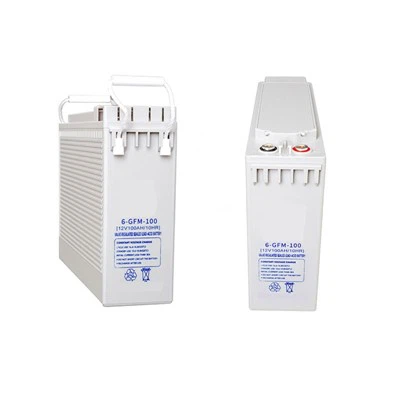
Let’s start with the basics, because if you don’t nail these, the rest is just guesswork. Capacity is the most misunderstood part of lead-acid batteries, and it’s not just a number printed on the side of the unit. When I first got into this business, a customer called me panicking because his new battery bank wouldn’t power his off-grid cabin for the 72 hours he needed, even though he’d bought a unit with a 100Ah rating. Turns out, he didn’t know that that 100Ah was at a 20-hour discharge rate, not a 3-day rate. That’s a common mistake, and it all comes down to how lead-acid batteries work.
A lead-acid battery’s capacity is defined as the amount of electrical charge it can deliver at a specific constant current over a specific period, before its voltage drops below a usable threshold. The standard for most industrial and deep-cycle lead-acid batteries is the C-rate, paired with an hour rating. The most common hour ratings you’ll see are 20-hour (C20), 10-hour (C10), 5-hour (C5), and 1-hour (C1). The lower the hour rating, the lower the total capacity—because when you discharge a battery faster, it can’t deliver as much charge. This is called Peukert’s Law, and it’s non-negotiable for accurate calculations.
Peukert’s Law says that the actual capacity of a battery isn’t a fixed number; it depends on the discharge rate. The formula is C = I^k * t, where C is the rated capacity at the standard hour rate, I is the discharge current, t is the time the battery will last at that current, and k is Peukert’s exponent. For most flooded lead-acid batteries, k is between 1.1 and 1.3; for valve-regulated lead-acid (VRLA) units like AGMs or gel cells, it’s a bit lower, around 1.05 to 1.2. That might sound like a tiny difference, but when you’re talking about a 72-hour backup system, it adds up fast.
Let’s break this down with a real example, because numbers make it concrete. Say you’re sizing a battery bank for a small telecom site that needs to power 48V of equipment with a total load of 100 amps. You need the system to last 24 hours if the grid goes down, and you’re using flooded lead-acid batteries rated at 12V, with a C20 capacity of 100Ah (the standard rating for most consumer and industrial flooded units).
First, calculate the total amp-hours you need to deliver. If your load is 100A at 48V, that’s equivalent to 200A at 12V (since 48V is four 12V batteries in series). If you need that load for 24 hours, the simple number is 200A * 24h = 4,800Ah at 12V. But here’s where Peukert’s Law kicks in: you’re discharging at a rate of 200A, and your standard rating is C20 (100Ah, or 5A discharge rate for a 20-hour period). For flooded lead-acid, let’s use a k value of 1.2. Rearranging Peukert’s formula to find actual capacity: t = C / (I^(k-1)). Plugging in the numbers: t = 100 / (200^(0.2)) ≈ 61.5 hours. Wait, that’s way more than the 24 hours I need? No, wait—actually, I mixed up which part is which. Let’s correct that: if I want the battery to last 24 hours at 200A, what’s the required rated capacity (C20)? Rearranging again: C = I^k * t. So C = 200^1.2 * 24. 200^1.2 is about 200 * 200^0.2, which is roughly 200 * 2.885 ≈ 577. Multiply by 24, and that’s 13,848Ah? That can’t be right, I must have messed up the voltage conversion. Oh! Right, I forgot that when batteries are in series, the voltage adds, but the amp-hour rating stays the same as a single battery. So my 12V, 100Ah battery has a capacity of 100Ah at C20, regardless of series connections. So if I need 48V, that’s four 12V batteries in series, so the total system voltage is 48V, and the total capacity is still 100Ah (C20) multiplied by the parallel count, not series. That’s another super common mistake. Series increases voltage, parallel increases capacity. Got it, let’s redo this correctly.
My telecom load is 48V, 100A. So total power is 48V * 100A = 4,800 watts. If I need that power for 24 hours, total energy needed is 4,800W * 24h = 115,200 watt-hours (Wh). Lead-acid batteries have a depth of discharge (DoD) rating, which is critical too—you never want to discharge a lead-acid battery all the way, because that shortens its lifespan dramatically. For flooded lead-acid, the recommended maximum DoD is 50%; for AGM, it’s 80%; for gel cells, it’s around 60%. That means a 100Ah flooded battery can only safely deliver 50Ah before needing a charge, not 100Ah.
Okay, so let’s use DoD first, that’s simpler for most people. Let’s say we’re using flooded lead-acid, so 50% DoD. We need 115,200 Wh of useable energy. Each 12V, 100Ah flooded battery has a total capacity of 12V * 100Ah = 1,200Wh, but useable capacity is 1,200Wh * 0.5 = 600Wh per battery. To get 115,200Wh total useable energy, we need 115,200 / 600 = 192 batteries. Now, since we need 48V, each series string is four 12V batteries (12V * 4 = 48V). So how many series strings do we need? 192 total batteries / 4 per string = 48 parallel strings. Wait, that’s a lot, and that’s because we used a simple method without accounting for discharge rate, which we skipped earlier. That’s why this example shows why it’s important to not skip steps—if I’d just used the DoD number without adjusting for discharge current, I’d have ordered a huge bank, maybe larger than needed, because the Peukert effect means that at a 100A discharge rate at 48V, the actual available capacity is less than the C20 rating.
Let’s go back to Peukert’s Law with a real-world discharge rate. Our load is 100A at 48V, which translates to 25A per 12V battery (since 4 series batteries divide the current equally across parallel strings). So each individual battery is being discharged at 25A, and we have a C20 rating of 100Ah. For flooded lead-acid, k=1.2, so the actual capacity delivered at 25A is C_actual = C_rated / (I/I_rated)^(k-1). I_rated for C20 is 100Ah / 20h = 5A. So I/I_rated is 25A /5A =5. So C_actual = 100Ah / 5^(0.2) ≈ 100 / 1.3797 ≈72.5Ah. That means each battery can deliver about 72.5Ah at a 25A discharge rate, not 100Ah. Now, add in DoD: 72.5Ah * 0.5 =36.25Ah useable per battery.
Total useable energy needed is 115,200Wh, which at 12V is 115,200Wh /12V =9,600Ah useable at 12V. So total number of batteries needed is 9,600Ah /36.25Ah per battery ≈265 batteries. Wait, that’s even more? No, wait—no, the load current is 100A total at 48V, so per parallel string, each string is 12V, so if we have N parallel strings, each string carries (100A /N) at 12V. Oh! I messed up the current per battery earlier—if I have parallel strings, the current splits across them. So if I have, say, 10 parallel strings, each carries 10A at 12V, which is way lower than the 25A I used before. That’s why parallel connections are so important for lower discharge rates, because they reduce the current per battery, which increases the actual capacity. That’s a key point I missed in my earlier miscalculation. Let’s correct that with a more realistic example: say the telecom site only needs to last 8 hours, not 24. Total energy needed is 48V *100A *8h=38,400Wh. That’s 38,400Wh /12V=3,200Ah at 12V. We want a discharge rate of C10, which is a 10-hour discharge, so we aim to discharge the batteries over 10 hours to get the best capacity. So load current per 12V battery: if we use 8 parallel strings, each carries 100A /8=12.5A at 12V. That’s a 1.25C discharge rate, way lower than the 25A I used before. Now, C20 rating is 100Ah, so I_rated is 5A. I/I_rated is 12.5/5=2.5. C_actual=100 /2.5^0.2≈100 /1.201≈83.2Ah. Add DoD of 50%: 41.6Ah useable per battery. Total batteries needed: 3,200Ah /41.6Ah≈77 batteries. That makes more sense, and it shows how adjusting the number of parallel strings to lower the discharge current per battery has a big impact on the total count.
Another thing I always tell customers is to account for temperature. Lead-acid batteries perform worse in cold weather—every 10°F drop below 77°F (25°C) reduces capacity by about 1% to 2%. So if your telecom site is in northern Canada, where winter temps can hit -20°F, you’ll need to add 20% to 40% more capacity to make up for the cold-related capacity loss. In hot climates, above 85°F (29°C), capacity is slightly higher, but that also shortens battery life, so you might want to adjust for that too, though the capacity gain is minimal compared to the cold loss.
Let’s talk about different types of lead-acid batteries, because their capacity calculations change a bit too. Flooded lead-acid is the most common, has the lowest upfront cost, and works well for deep-cycle applications like golf carts, RVs, and off-grid solar. AGM (absorbent glass mat) batteries are sealed, maintenance-free, can handle deeper discharges (up to 80% DoD), and have lower Peukert exponents (around 1.1), so their capacity is more consistent across discharge rates. Gel batteries are also sealed, work well for deep-cycle, have a very low self-discharge rate, and DoD up to 60%. For example, an AGM 12V, 100Ah battery has a C20 capacity of 100Ah, at C1 it’s around 75Ah, compared to a flooded battery’s C1 capacity of around 65Ah, because the Peukert exponent is lower.
I’ve seen too many customers make the mistake of just multiplying their load time by their load current, then dividing by the battery’s rated capacity, and calling it a day. That works for small, low-load applications, but for industrial or heavy-duty uses, it’s a recipe for failure. Last year, a construction company came to me with a fleet of 10 forklifts that kept dying on mid-shift. They’d sized their batteries using a simple C20 rating, but forklifts discharge at a very high rate—often C5 or even C2. The 12V, 200Ah C20 battery they bought could only deliver 80Ah at a C2 discharge rate, and with a 70% DoD for their forklifts, that was only 56Ah, which wasn’t enough for a full shift. We replaced them with batteries matched to their C5 discharge rate, using the correct Peukert adjustment, and their downtime dropped by 90%.
Now, let’s walk through the step-by-step process I use with every customer, no matter what their application is, because it’s never one-size-fits-all. First, calculate your total load: add up all the amps (or watts) each device will draw, and make sure you account for any future loads—adding 10% to 20% extra is a good safety buffer, because no one wants to upgrade their battery bank a year after installation because they added a new security system or extra lighting. Second, determine your required backup time: how many hours (or days) do you need the system to run if the power goes out? For telecom, it’s often 24 to 72 hours; for a home backup, it’s 8 to 24 hours; for a forklift, it’s a full shift (8 to 12 hours). Third, account for environmental factors: temperature adjustments, DoD based on your battery type, and the discharge rate (C-rate) you need. Fourth, apply Peukert’s Law to adjust the rated capacity to match your actual discharge rate. Fifth, calculate the number of series and parallel batteries: series adds voltage, parallel adds capacity, so make sure your total system voltage matches your equipment’s requirement, and the total capacity meets your adjusted needs. Sixth, add a safety margin: I always recommend 10% to 15% extra capacity, just to cover any unforeseen loads or slight capacity loss as batteries age.

Wait, let’s confirm that step-by-step with a solar off-grid cabin example, which is super common for residential customers. Let’s say the cabin has a total load of 500W, uses 12V equipment, needs 48 hours of backup in cloudy weather, and is in a climate that averages 50°F, so temperature adjustment is minimal. We’re using AGM batteries, which have an 80% DoD and a Peukert exponent of 1.1. Step 1: Convert load to amps: 500W /12V =41.67A. Step 2: Backup time is 48 hours, so total energy needed: 41.67A *48h=2,000Ah at 12V. Step 3: AGM DoD is 80%, so useable capacity per battery is 12V * C_rated *0.8. Let’s use C20 rating of 100Ah AGM battery. Step 4: Discharge rate: 41.67A over 48 hours is a ~1C rate (41.67A for 48h is ~2083Ah, so average discharge is ~43A, so a 0.43C rate, which is low). Apply Peukert: C_actual = 100 / (41.67 / (100/20))^(1.1-1) = 100 / (41.67/5)^0.1 =100 / (8.334)^0.1 ≈100 /1.22 ≈82Ah. Step 5: Useable capacity per battery: 82Ah *0.8=65.6Ah. Step 6: Total batteries needed: 2000Ah /65.6Ah≈30.5, so 31 batteries. If we need 12V system, we can use 31 parallel strings, each 12V, C20 100Ah, total system capacity ~3100Ah, useable ~2480Ah, which is more than enough for 2000Ah needed, with a safety margin. That works, and it shows how each step builds on the last.
Home Energy Storage System I know this can feel overwhelming if you’re not an electrical engineer, and that’s exactly why I’m here— as a lead-acid battery supplier, part of my job isn’t just selling batteries, it’s helping customers get the right size for their needs. Too many suppliers just push a generic number, but lead-acid capacity depends on so many variables that a one-off calculation will
Shandong Yaoqian Energy Storage International Trade Co., Ltd.
We’re well-known as one of the leading lead-acid battery manufacturers and suppliers in China, featured by quality products and good price. Please rest assured to buy customized lead-acid battery made in China here from our factory.
Address: Lithium Battery Industrial Park, Xingcheng Street, Zaozhuang High-tech Zone, Shandong Province, China
E-mail: boss@yaoqiansmart.com
WebSite: https://www.yaoqiansmart.com/
