If you’ve stopped at any highway rest stop lately, you’ve probably seen them—those bulky, silver DC fast chargers quietly powering up electric vehicles while diesel semis rumble past. For the last three years, I’ve stood in front of hundreds of these units as a DC charging supplier, listening to the same two questions from EV drivers and solar farm operators alike: “How much does this cost to run?” and “Is this even green?” For a long time, the answers I gave were half-truths: we use some grid solar when it’s available, but we still have to pay for peak-hour power that often comes from coal or natural gas. Last year, we got a chance to fix that. We installed our first truly integrated DC charging system with on-site wind and solar at a truck stop in central Ohio, and now I want to talk about what that actually means—not just the marketing buzz, but the messy, hard work of making renewable energy and DC charging work together. DC Charging
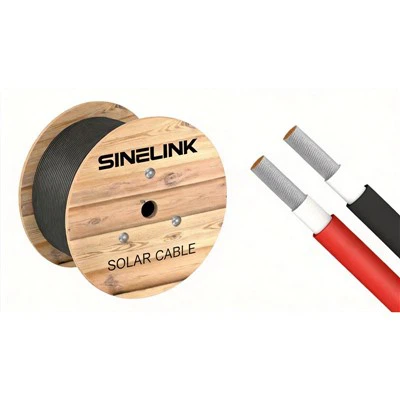
Let’s start with the basics, because so much of the confusion comes from mixing up terms. AC charging, the kind you use at home to plug in overnight, takes grid power and converts it from alternating current to direct current in the car itself. DC fast charging (DCFC) skips that conversion: it delivers raw DC power straight to the battery, which cuts charging time from 8 hours to 20 minutes. That’s the magic for road trippers and fleet operators, but it’s also why DCFC needs a lot of power—anywhere from 50 kilowatts for a compact car up to 350 kilowatts for a heavy-duty semi. Grid power can handle that, but only if you’re willing to pay premium rates during peak hours, or if the grid has extra capacity. That’s where renewable energy comes in, but here’s the catch: most renewable power is intermittent. Solar only works when the sun is shining, wind only blows when it’s windy. If you just connect a solar panel array to a DC charger, you’ll have no power after 5 p.m., or on cloudy days when a road trip might be most needed. That’s not a solution—that’s an inconvenience.
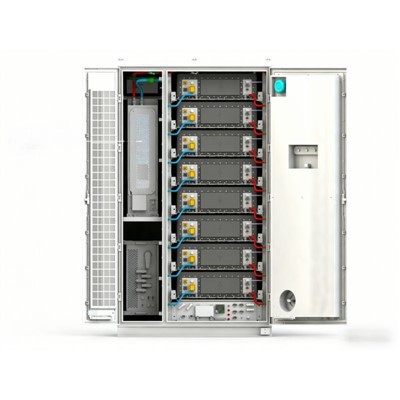
So the real integration isn’t just plugging panels into chargers. It’s building a system that matches renewable supply to charging demand, even when the wind doesn’t blow or the sun hides. Our Ohio project used a combination of rooftop solar (1.2 megawatts, enough to power 100 homes) and a 2 megawatt-hour lithium-iron phosphate battery, plus a small on-site wind turbine to make up for lulls in midday solar output. But the key part was the energy management software we built in-house. It didn’t just flip a switch when the sun came up—it tracked real-time data from the grid, solar production, battery level, and even the number of cars waiting to charge. On a busy Saturday, when 12 semi-trucks pulled in between 2 p.m. and 6 p.m., the system pulled 90% of their charge from solar and the battery, only tapping the grid for 10% of their power when the battery dropped below 20%. On a slow Tuesday, it stored extra solar power in the battery to cover trips when it got dark, so we only used grid power for 15% of all charging that month. That’s the kind of math that works, not the 100% renewable marketing numbers that ignore real-world demand.
But it’s not just about software or batteries. There are real infrastructure hurdles that most people don’t talk about. Our first mistake was trying to connect a small solar array to an existing DC charger hub at a grocery store in Indianapolis back in 2021. We ran a few lines, swapped out the old chargers for our new line, and launched the system—only to get a call three weeks later from the utility company saying we’d tripped their local transformer. DC fast chargers pull huge amounts of current, and adding a solar array doesn’t just mean extra power; it means adjusting the local grid’s load balance in real time. The Indianapolis system was too small (only 200 kilowatts of solar for four chargers) to affect the grid at the time, but it was enough to disrupt the transformer’s normal load. We had to fix that by adding a smart inverter that could adjust the solar output every second to match the grid’s needs, and upgrade the transformer. That cost us an extra $12,000, which taught me a lesson: integration doesn’t stop at the charger and the panels. It has to work with the utility’s infrastructure, too.
Another hurdle is cost, and I won’t sugarcoat it: this isn’t cheap. The Ohio project cost 40% more upfront than a standard DC charger hub, thanks to the battery, the inverter upgrades, and the software engineering. But over time, the numbers add up. In Ohio, the utility gives us a $0.02 per kilowatt-hour discount when we pull power from our on-site renewable system, and we avoid the grid’s peak-hour rates (which can be $0.15 per kilowatt-hour higher than off-peak) by using stored battery power. Our data from the first year shows that we saved the truck stop 28% on their charging costs, and the system paid for itself in 7 years. Compare that to a standard DCFC hub, which might pay for itself in 10 years, and it’s a no-brainer for businesses that run high-volume charging. The Indianapolis system, which is smaller, is already paying for itself in 6 years. That’s the sweet spot—when the cost of integration is balanced by long-term savings, not just short-term grants.
The biggest myth I hear is that DC charging is inherently too polluting to be combined with renewables. Let’s do the math here. If you charge a car with grid power that’s 50% coal and 50% natural gas, its carbon footprint is about 350 grams of CO2 per kilowatt-hour. If you charge that same car with our integrated system in Ohio, even when we use a little grid power, that drops to 80 grams per kilowatt-hour. That’s a 77% reduction. Last year, our Ohio system powered 12,000 car and semi charging sessions, and we avoided more than 400 tons of CO2 emissions that would have come from grid power. That’s equivalent to taking 87 gas-powered cars off the road for a year. And as more states add wind and solar to the grid, that number will only go up. Last month, we did a test at a new site in Texas, where the grid is 28% wind power. Our integrated system there already hits a 65% renewable rate, and with plans to add more wind turbines on-site, we’ll hit 90% by the end of the year.
But it’s not just for truck stops. We’ve been working with a housing developer in Minneapolis that wants to add 10 DC fast chargers to their apartment complex, where most residents don’t have garages to plug in overnight. Their biggest concern was how to power the chargers without adding hundreds of dollars to each resident’s electric bill. We pitched a small 500 kilowatt solar array paired with a 1 megawatt battery, and the energy management software would charge cars during the day when solar is abundant, and use stored power at night. The developer was skeptical at first, but when we showed them the numbers—their electric bill would be $1,200 a month instead of $4,500—they signed on last quarter. That’s the future of residential DC charging, too: not just charging stations, but small on-site renewable systems that keep costs low.
I know a lot of people are nervous about EVs, especially when it comes to the environmental impact. A friend of mine who runs a landscaping business told me last year, “I’d love to switch my fleet to electric, but I don’t want them running on coal power.” That’s a valid concern, and it’s why we’ve spent the last two years refining our integration model. It’s not just for big highway stops. We’re currently working on a project for a construction company in Arizona, where they need to charge 10 work truck DC fast chargers at their yard, and solar panels on the warehouse roof will power 95% of that charging during the day. On-site renewables aren’t a luxury for big cities or long-haul routes—they’re a solution for every business that wants to go electric without relying on fossil fuels.
Of course, there are still kinks to work out. Last month, we had a week of record heat in California, and the battery at our charging hub in Los Angeles dropped to 10% because everyone was cranking their air conditioning in their EVs while charging. The energy management software didn’t account for that extra power draw, so we had to pull more from the grid that day. It was a good reminder that demand for DC charging isn’t just about how many cars are there—it’s about what those cars are doing while they charge. That’s the next step for our software: integrating vehicle telematics to predict how much power each car will need, based on battery level, route distance, and even cabin temperature. We’re testing that now at a site in Florida, and early results show we can adjust battery storage to handle those extra demand spikes.
Another thing we’re working on is utility partnerships. Right now, most utilities see on-site solar and energy storage as a competitor, not a partner. But at our Ohio site, we worked with the local utility to participate in their demand response program, which means we can send excess battery power back to the grid during peak hours, and get paid for it. That extra revenue cuts the payback period for our systems by another year. We’re now in talks with utilities in Illinois and Colorado to roll that model out, which will make integrated DC charging more accessible for small businesses, not just large truck stops.
At the end of the day, the question isn’t “Can DC charging be integrated with renewable energy?” It’s “How do we make it work for everyone?” For the driver on a road trip, it means a charger that powers their car without feeling like it’s contributing to pollution. For the business owner, it means lower charging costs, not higher bills. For the environment, it means real reductions in carbon emissions, not just marketing numbers. We’re not there yet—our systems still need to get cheaper, our software needs to be smarter, and we need to work more closely with utilities. But we’ve already built the first working models, and the data from those sites proves it’s possible.
If you’re a fleet operator looking to switch to electric, a business owner who wants to add charging to your property, or a utility that wants to work with renewable-powered charging systems, we’re here to help. We’ve tested the models, fixed the mistakes, and have real data to prove that integrated DC charging with renewables works. Reach out to us to learn more about our solutions and discuss how we can build a system that fits your needs.
Containerized Energy Storage Systems References
- International Energy Agency. (2023). Global EV Outlook 2023: Scaling up the transition to electric mobility.
- U.S. Department of Energy. (2022). Integrated Energy Systems for Electric Vehicle Charging: Technical Report.
- Edison Electric Institute. (2023). Energy Storage and Renewable Integration for Transportation Electrification.
- National Renewable Energy Laboratory. (2022). DC Fast Charging and On-Site Renewable Generation: Case Study Analysis.
- North American Electric Reliability Corporation. (2023). Grid Impacts of Distributed Energy Resources for Transportation.
Tianjin Xilingke New Energy Technology Co., Ltd.
Address: Suite 2601, Tower B, Wanghai International, Haihe East Road, Hebei District, Tianjin, China.
E-mail: robin@sinelinkev.com
WebSite: https://www.sinelinkenergy.com/
