Hey there! I’m a supplier of inorganics, and today I wanna chat about the super cool applications of inorganics in water treatment. It’s a topic that’s not only important for keeping our water clean but also offers some really interesting solutions. Inorganics
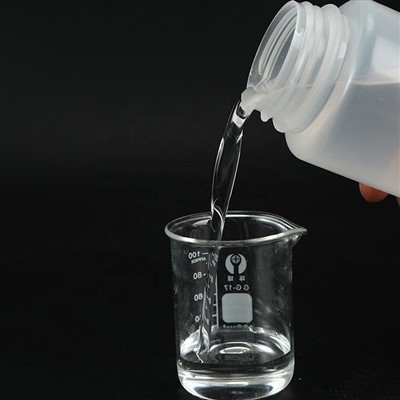
First off, let’s talk about coagulants, which are a big deal in water treatment. One of the most commonly used inorganic coagulants is aluminum sulfate, also known as alum. Alum works by neutralizing the electrical charges on suspended particles in water. You know how sometimes water looks cloudy or has little bits floating around? That’s where alum comes in. When you add alum to the water, those tiny particles start to clump together. This process is called coagulation. Once the particles are clumped, they’re easier to remove. It’s like when you’re trying to pick up a bunch of small pieces of paper. It’s way easier to grab them all if they’re stuck together in a ball.
Another great inorganic coagulant is ferric chloride. Ferric chloride is really effective at removing a wide range of impurities from water. It can work in different pH ranges, which is a huge advantage. In some water treatment plants, the pH of the water can vary, and ferric chloride can still do its job. It forms strong flocs, which are those clumps of particles I mentioned earlier. These flocs are heavy and settle to the bottom of the water tank quickly. This makes it easier to separate the clean water from the dirty stuff.
Now, let’s move on to disinfectants. Chlorine is an inorganic compound that’s been used for ages to disinfect water. It’s super effective at killing bacteria, viruses, and other harmful microorganisms. When you add chlorine to water, it reacts with the water to form hypochlorous acid and hypochlorite ions. These substances are what actually do the disinfecting. They attack the cell walls of the microorganisms and destroy them. It’s like a tiny army of cleaners going through the water and getting rid of all the bad guys.
But chlorine isn’t the only inorganic disinfectant out there. Ozone is another powerful one. Ozone is a gas made up of three oxygen atoms. It’s a really strong oxidizing agent. When ozone is added to water, it can break down organic compounds and kill microorganisms. The great thing about ozone is that it doesn’t leave any harmful by – products in the water. Once it does its job, it breaks down into oxygen. It’s like a natural cleaner that just disappears after it’s done cleaning.
In addition to coagulants and disinfectants, inorganics are also used in water softening. Hard water contains high levels of calcium and magnesium ions. These ions can cause problems like scale buildup in pipes and appliances. One way to soften water is by using ion – exchange resins. These resins are often made with inorganic materials like zeolites. Zeolites have a unique structure that allows them to trap calcium and magnesium ions and release sodium ions instead. It’s like a swap – meet for ions. The hard water goes through the zeolite resin, and the calcium and magnesium ions are replaced with sodium ions, making the water softer.
Another application of inorganics in water treatment is in the removal of heavy metals. Heavy metals like lead, mercury, and cadmium are really dangerous if they’re present in water. Inorganic adsorbents can be used to remove these heavy metals. For example, activated alumina is a great adsorbent for fluoride and some heavy metals. It has a large surface area with lots of tiny pores. These pores can trap the heavy metal ions. It’s like a sponge that soaks up all the bad stuff in the water.
Now, I know what you’re thinking. "This all sounds great, but how do I get my hands on these inorganics for my water treatment needs?" Well, that’s where I come in. As a supplier of inorganics, I’ve got a wide range of products that are perfect for water treatment. Whether you need coagulants to clear up cloudy water, disinfectants to kill harmful microorganisms, or materials for water softening and heavy metal removal, I’ve got you covered.
The quality of my inorganics is top – notch. I work with reliable manufacturers to make sure that all my products meet the highest standards. And I’m not just here to sell you stuff. I’m also here to offer advice and support. If you’re not sure which product is right for your specific water treatment situation, I can help you figure it out.
So, if you’re in the market for inorganics for water treatment, don’t hesitate to reach out. Whether you’re running a small water treatment plant or just need to treat the water in your home, I can provide you with the products and knowledge you need. Let’s work together to keep our water clean and safe.

In conclusion, inorganics play a crucial role in water treatment. From coagulants and disinfectants to water softeners and heavy metal removers, they offer a wide range of solutions. And as a supplier, I’m excited to be part of this important process. So, if you’re interested in learning more or making a purchase, just drop me a line.
Sweeteners References:
- "Water Treatment Handbook" by Water Treatment Society
- "Inorganic Chemistry in Environmental Science" by John Wiley & Sons
- "Principles of Water Treatment" by American Water Works Association
Sinoright International Trade Co., Ltd.
We’re well-known as one of the leading inorganics manufacturers and suppliers in China, featured by quality products and good price. With abundant experience, we warmly welcome you to buy bulk inorganics for sale here from our factory.
Address: NO.13-1 HESHUOYUAN, GANJINGZI DIST, DALIAN,CHINA
E-mail: harry.du@sinoright.net
WebSite: https://www.sinoright-chemicals.com/
