If you’re working in the solar industry—whether installing utility-scale farms, rooftop residential arrays, or off-grid systems—you know that every component of your setup has to balance performance, durability, and practicality under real-world conditions. One part that often goes overlooked until it causes delays or failures is the solar cable, and specifically the flexibility of TUV-certified solar cables. As a supplier of these cables, I’ve spent years answering questions from installers, engineers, and project managers about why flexibility matters, what makes TUV solar cables different from standard alternatives, and how to leverage that flexibility to make your projects smoother and more reliable. Let’s break it down. TUV Solar Cable
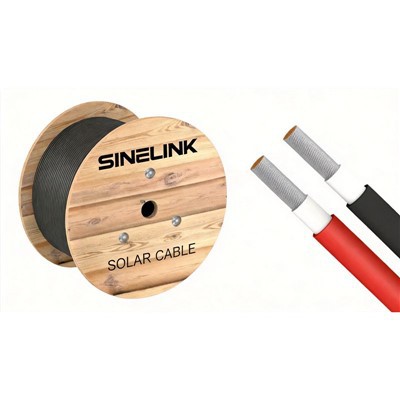
First, it’s important to ground this in what TUV certification actually means for solar cables, because that certification directly ties to their flexibility. TUV Rheinland, a global testing and certification body, sets strict standards for solar cables that address everything from UV resistance and temperature tolerance to mechanical performance. For flexibility specifically, TUV’s testing protocols don’t just measure how easily a cable bends once—they test how it holds up to repeated bending, twisting, and movement over its 25+ year service life, which is the industry standard for solar projects.
I get calls all the time from installers who say, “Why not just use a regular copper cable for my solar array?” The answer is simple: regular cables are built for indoor, fixed applications, not the harsh outdoor environment of a solar array. TUV solar cables are engineered with a specialized conductor core and outer jacket that combine flexibility with durability. Most standard cables use solid copper conductors, which are rigid, hard to route around sharp corners or through tight spaces, and prone to cracking if bent too many times. TUV solar cables, by contrast, use tinned stranded copper conductors with hundreds of fine strands. That stranded design is the foundation of their flexibility, but it’s not just about being bendable—TUV testing verifies that those strands won’t break or fray even after thousands of bending cycles.
So why does that flexibility actually matter for your projects? Let’s start with installation. Installing a solar array means routing hundreds of cables between panels, combiner boxes, and inverters. If a cable is too rigid, you’re fighting to feed it through conduit, around mounting brackets, or between panels that are spaced tightly together. That extra effort not only slows installation time, but it also increases the risk of accidentally kinking or damaging the cable during routing. I’ve seen installers cut corners on cable runs because a rigid cable won’t fit, leading to loose connections or exposed wires that become fire hazards. Flexible TUV solar cables make it easy to navigate even the most complex rooftop or ground-mount layouts, reducing installation time and the risk of human error on the job site.
Next, consider the mechanical stress that solar cables face once installed. A solar array isn’t a static system: wind can cause panel frames to shift slightly, temperature changes (from -40°C in winter to 85°C in direct summer sun) make materials expand and contract, and even thermal imaging scans or maintenance access can put minor pressure on cable runs. A rigid cable will develop micro-cracks in its outer jacket or break strands if subjected to repeated small movements. Those cracks let in moisture, dust, and UV radiation, leading to corrosion or insulation failure over time. The flexibility of TUV solar cables means they can absorb that minor movement without damage, extending their service life and reducing the need for costly repairs or replacements years down the line.
There’s also a safety angle that’s often underdiscussed. TUV solar cables with the right flexibility ratings meet strict flame-resistance and insulation integrity standards, which are non-negotiable for solar installations. The material used in their jackets—usually cross-linked polyethylene (XLPE) or ethylene propylene diene monomer (EPDM)—is both flexible and flame-retardant. A cable that’s too stiff, especially if it’s a lower-quality non-TUV option, may have a thinner or less durable jacket that cracks under stress, exposing live conductors. That’s a major fire risk, not to mention a violation of most electrical codes. I always tell my customers that flexibility isn’t just a convenience—it’s a safety feature that’s verified by TUV testing.
Now, let’s talk about what makes TUV solar cable flexibility different from other flexible cables on the market. There’s a lot of “flexible” cables out there that aren’t actually certified for solar use. These might use a basic stranded conductor but skip the specialized jacket materials that resist UV, temperature, and moisture. When tested by TUV, these cables would fail the repeated bending test or the thermal cycling test, because their materials can’t handle the outdoor environment. As a supplier, I only stock cables that pass TUV’s Type 2 flexibility test, which involves bending the cable around a mandrel with a diameter equal to 3 times the cable’s outer, repeated 10,000 times at temperatures ranging from -40°C to 85°C. That’s a rigorous test that ensures the cable stays flexible, intact, and functional for decades.
I’ve worked with a lot of customers who’ve switched from cheaper, non-TUV flexible cables to our TUV-certified products, and the difference in performance is clear. One residential installer told me that they used to spend 2 extra hours per project fighting with rigid cables during installation, and they had 1 or 2 failures per year from cable breaks. After switching to our TUV flexible solar cables, installation time dropped by 30% for the same size array, and they haven’t had a cable failure in over 3 years. That’s the real value of flexibility: it’s not just about being easy to bend, it’s about reducing labor costs, project delays, and long-term maintenance.
Of course, flexibility isn’t a one-size-fits-all feature. TUV solar cables come in different sizes and configurations for different applications, and their flexibility is tailored to each. For example, smaller cables (like 2.5 mm² for panel-to-panel connections) are naturally more flexible than larger cables (like 10 mm² or 16 mm² for combiner box connections). Even so, even the larger TUV solar cables are designed to be flexible enough to route without kinking, which is a big advantage for ground-mount arrays where cables have to run long distances over uneven terrain. Some customers also ask about cold flexibility, which is important for projects in very cold climates. Our TUV cables pass testing at -40°C, so they stay flexible even in freezing temperatures, making them easy to work with during winter installations and resistant to cracking when temperatures drop.
A common misconception I encounter is that flexible cables are less durable than rigid ones. That’s simply not true, when it comes to TUV-certified solar cables. TUV’s testing standards weigh mechanical performance heavily, so flexibility is tested alongside tensile strength, insulation thickness, and abrasion resistance. Our cables not only bend easily, but their outer jackets are rated to resist abrasion from rocks, wind-blown debris, and even accidental contact with tools during maintenance. In fact, a TUV cable that’s built to be flexible is often more durable than a rigid cable, because it can absorb stress instead of breaking under it.
So how can you put that flexibility to work on your projects? Here are a few practical tips from years of working with installers: First, when designing your cable runs, account for the flexibility of TUV solar cables. Don’t plan for a rigid cable’s tight bend radius—allow for extra space if you need to route cables around corners or through conduit. This reduces strain on the cable and prevents premature damage. Second, for rooftop installations where space is tight, flexible TUV solar cables make it easy to route cables along roof edges without sharp bends, which is important for avoiding damage to the cable jacket. Third, for off-grid or portable solar systems, where you’re moving components occasionally, flexible TUV cables are more resistant to damage from transport than rigid cables.
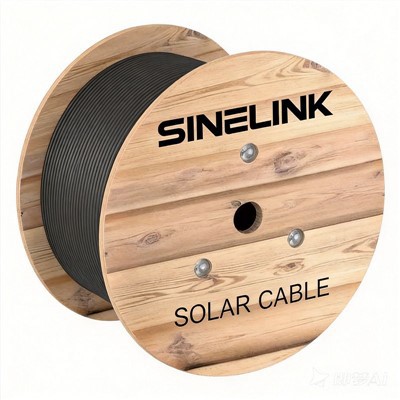
At the end of the day, the flexibility of TUV solar cables is a key performance feature that directly impacts installation time, safety, and long-term reliability. It’s not a trivial design choice—it’s the result of rigorous testing and engineering that’s tailored to the unique demands of solar energy systems. As a supplier, I’m always here to help you select the right TUV solar cables for your projects, whether you’re working on a small residential array or a large commercial farm. If you’re looking to upgrade your cables, discuss your project requirements, or get a quote, reach out to my team for a personalized consultation. We’ll walk you through the benefits of TUV flexibility, answer your questions, and help you choose products that meet your needs and budget.
Home Battery References
- TUV Rheinland. (2022). Standard for Solar Photovoltaic Cables: Mechanical Performance Requirements.
- International Electrotechnical Commission. (2021). IEC 62930: Test Methods for Solar Cable Flexibility and Durability.
- Solar Energy Industries Association. (2023). Installation Best Practices for Flexible Solar Cables.
- IEEE. (2022). Mechanical Stress Mitigation in PV System Cabling.
Tianjin Xilingke New Energy Technology Co., Ltd.
As one of the most professional tuv solar cable manufacturers and suppliers in China, we’re featured by quality products and low price. Please rest assured to wholesale durable tuv solar cable made in China here from our factory. For quotation, contact us now.
Address: Suite 2601, Tower B, Wanghai International, Haihe East Road, Hebei District, Tianjin, China.
E-mail: robin@sinelinkev.com
WebSite: https://www.sinelinkenergy.com/
